
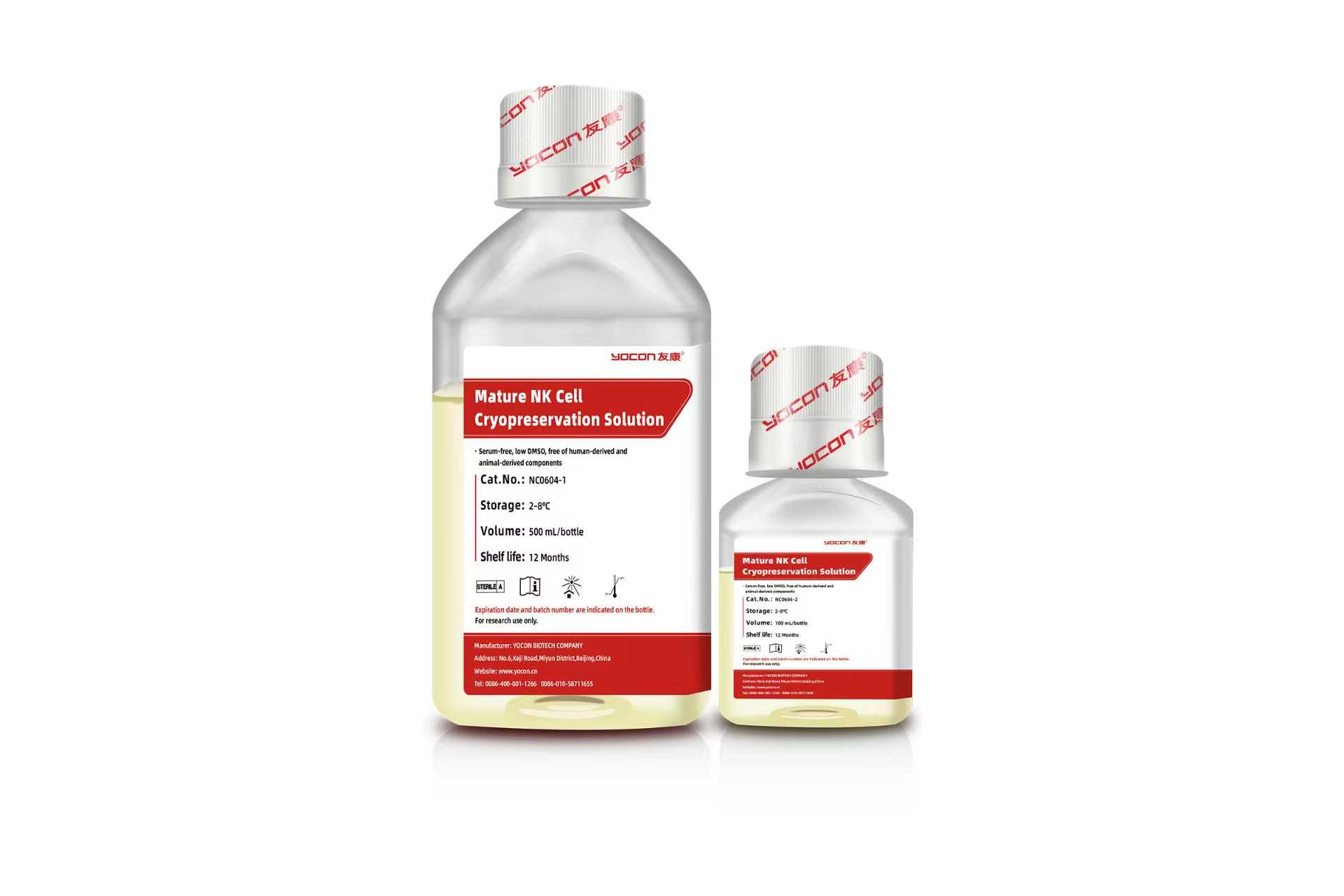
| Product Name | Catalog No. | Specification | Storage Condition | Shelf Life |
|---|---|---|---|---|
| Mature NK Cell Cryopreservation Solution | NC0604-1 | 500 mL/ bottle | 2–8 ℃, protected from light | 12 months |
| NC0604-2 | 100 mL/ bottle |
Product Advantages
This formulation adopts a recombinant human albumin system, serum-free, human-origin & animal-origin free, with fully chemically defined components. The low-DMSO formula significantly reduces cytotoxicity, suitable for long-term preservation of NK cells induced from peripheral blood, umbilical cord blood and other sources.
Special membrane and protein stabilizers are incorporated to effectively protect cells from cryoinjury. Post-thaw recovery can reach over 80%, and the viability difference from fresh control is minimal (<2%). Meanwhile, the high cytotoxic activity of NK cells is maintained.
Ready-to-use, no extra preparation required, easy to operate; supports direct cryopreservation at large volume and high cell density.
Umbilical Cord Blood-derived NK Cryopreservation Data
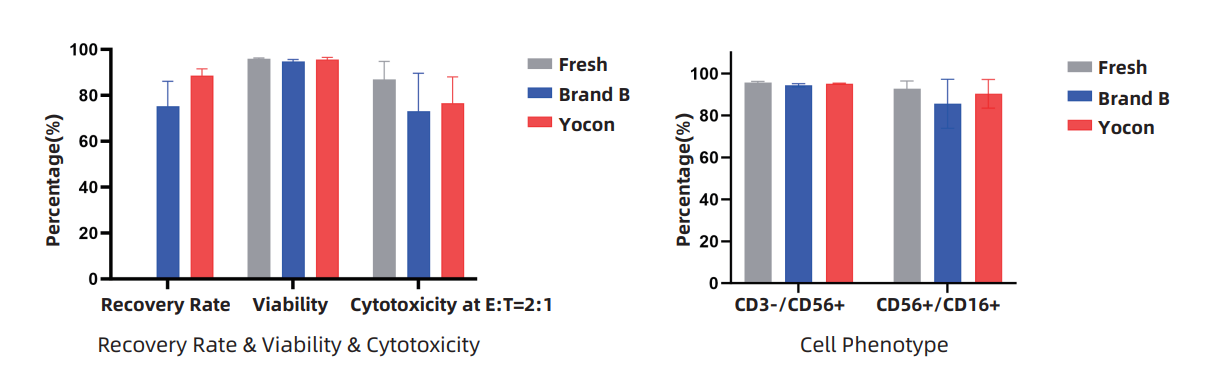
Cryovial — Short-term Cryopreservation
Cryovial — 3 Months Cryopreservation
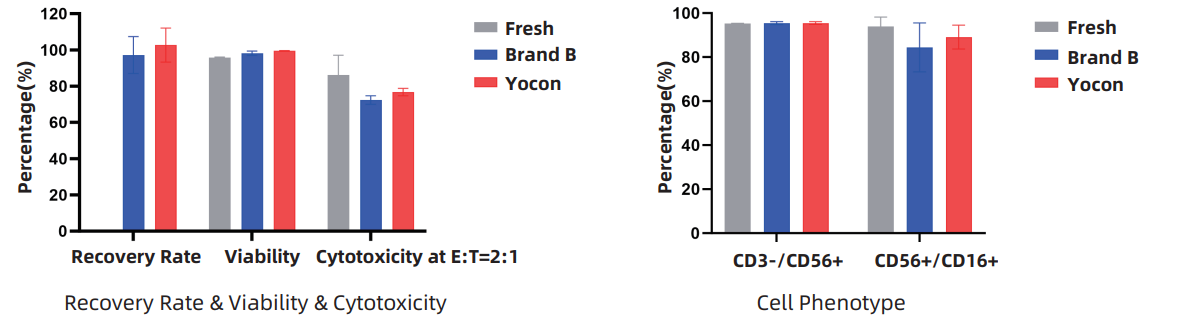
For NK cells derived from umbilical cord blood samples cryopreserved in cryovials, the recovery rate remains >80% for both short-term and long-term cryopreservation. The viability difference compared with fresh samples is <1%; cytotoxicity (E:T=2:1) retains more than 80% of fresh samples. The CD3⁻CD56⁺ phenotype is basically consistent with fresh samples, and CD56⁺CD16⁺ phenotype retains over 80% of fresh samples. The product outperforms competing cryopreservation media.
30 mL Cryobag Cryopreservation
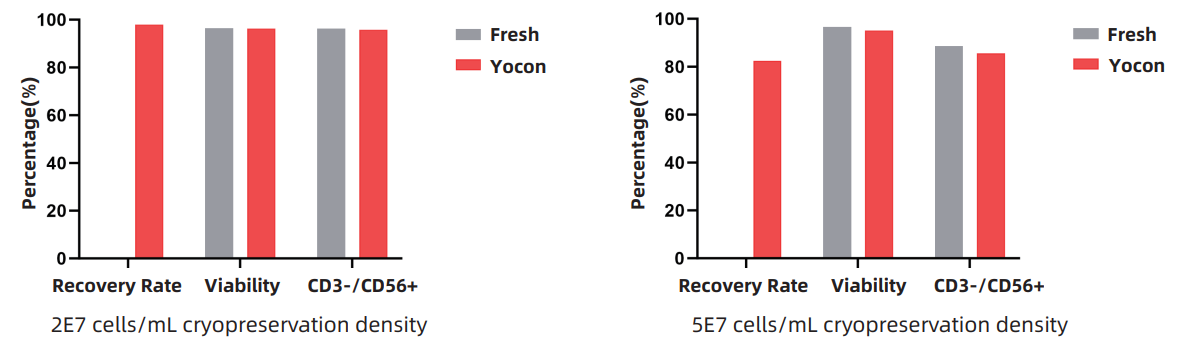
When NK cells from umbilical cord blood samples are cryopreserved in 30 mL cryobags, the recovery rate >80%, viability difference <1% relative to fresh samples, and the CD3⁻CD56⁺ phenotype shows no significant difference from fresh samples.
Peripheral Blood-derived NK Cryopreservation Data
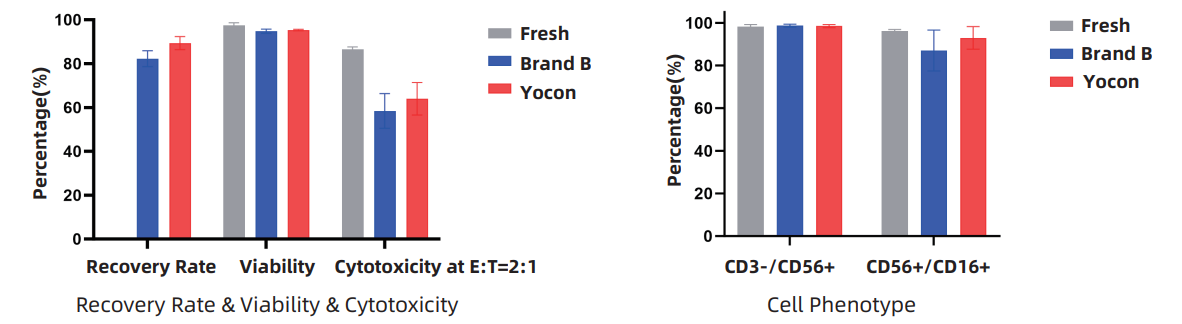
For NK cells derived from peripheral blood samples cryopreserved in cryovials, the short-term recovery rate exceeds 80%, viability difference <2% compared with fresh samples; cytotoxicity (E:T=2:1) retains more than 70% of fresh samples. The CD3⁻CD56⁺ phenotype is basically consistent with fresh samples, and CD56⁺CD16⁺ phenotype retains over 70% of fresh samples. The product outperforms competing cryopreservation media.


